STUDENTS’ ACHIEVEMENT (2009-Ongoing):
Mr. Saurav Kumar got selected for poster presentation at 41st Annual Conference of the Indian Association for Cancer Research, organized by Amity Institute of Molecular Medicine & Stem Cell Research, Amity University, Uttar Pradesh, Noida from 2nd -5th March 2022. Saurav Kumar, Vaishali Mulchandani, Jayasri Das Sarma. Methanolic neem (Azadirachta indica) stem bark extract inhibits the growth and migration of cervical cancer cells in vitro.
Prof. Jayasri das Sarma received the 2022 AAI Laboratory Travel Grant to present her work in Immunology 2022 Portland, the USA where Madhav Sharma was the second recipient.
Ms Grishma Kasle received the "ASBMB Graduate Travel Award" to present her work at the Experimental Biology 2022 conference held in Philadelphia, USA from 2nd April to 5th April 2022.
Mr Abass Alao Safiriyu got selected for the oral presentation under the Tulsabai Somani Education Trust Award category at the XXXVIX Annual E-Conference of the Indian Academy of Neuroscience jointly organized by the Indian Institute of Science Education and Research Kolkata (IISER-K), in coordination with Netaji Subhas Open University (NSOU) and CSIR-Indian Institute of Chemical Biology (IICB), 16th-19th Dec 2021
Mr. Madhav Sharma received Dr. SS Parmar Poster Award for best poster at the XXXVIX Annual E-Conference of Indian Academy of Neuroscience jointly organized by the Indian Institute of Science Education and Research Kolkata (IISER-K), in coordination with Netaji Subhas Open University (NSOU) and CSIR-Indian Institute of Chemical Biology (IICB), 15th-19th Dec 2021
Mrs. Fareeha Saadi received full scholarship registration waiver to attend and present poster at Keystone Symposia’s eSymposia on Neuroimmune Interactions in Health and Disease,2021.
Ms. Debanjana Chakravarty received full scholarship registration waiver to attend and present poster at Keystone Symposia’s eSymposia on Neuroimmune Interactions in Health and Disease, 2021
Ms Vaishali Mulchandani has received the prestigious PMRF fellowship in the Dec 2020 cycle.
Ms. Mithila Ashok Kamble was awarded the S.S. Parmar Research Foundation award for the best poster presentation at the XXXVIII Annual Conference of the Indian Academy of Neurosciences, November 2020.
Ms. Lucky Sarkar received "International American Society for Virology (ASV)" travel award to present her work in a 5' flash talk plus a poster in the Pathogenesis session at 39th Annual Meeting of the „American Society for Virology ASV, June 2020‟, Colorado State University, Fort Collins, CO, USA (cancelled due to COVID-19 pandemic).
Ms. Lucky Sarkar's work "Azadirachta indica A. Juss ameliorates Mouse Hepatitis virus-induced neuroinflammatory demyelination" was highlighted and selected to present for a 5' flash talk plus a poster in the Pathogenesis session at 39th Annual Meeting of the „American Society for Virology ASV, June 2020‟, Colorado State University, Fort Collins, CO, USA (cancelled due to COVID-19 pandemic).
Mr. Soumya Kundu received the ASBMB travel award to attend the Annual meeting of American Society for Biochemistry and Molecular Biology, 2020 at San Diego, California, USA (cancelled due to COVID-19 pandemic).
Mr. Abhishek Bose got selected to deliver an oral presentation in the Society for Neuroimmune Pharmacology (SNIP 2020) international conference, April 2020 (cancelled due to COVID-19 pandemic).
Mr. Abhishek Bose achieved Best poster award at "New Insights into the Inflammation, Immunity, and Pathobiology of Diseases, INDO-US Symposium" organized by IUSSTF/IISER Kolkata, December 2019.
Ms. Debanjana Chakravarty and Mr. Soumya Kundu got selected for the oral presentation at the "Indo-US Symposium on New Insights into the Inflammation, Immunity, and Pathobiology of Diseases", 2019.
Ms. Fareeha Saadi received the Young scientist best oral presentation award at Neuroupdate 2019, organized by CSIR-IICB, Kolkata, India.
Ms. Lucky Sarkar got selected under Dr. DM Kar Prize category and presented her paper at "XXXVII Annual Meet of Indian Academy of Neurosciences (IAN 2019)-Neuron to Behavior", AIIMS New Delhi, India, November 2019.
Mr. Sourodip Sengupta received Best poster presentation on "Role of matrix metalloproteinases (MMPs) and tissue inhibitor of MMPs (TIMPs) in Mouse Hepatitis Virus (MHV) induced neuroinflammation" at IBRO-APRC School on Blood-Brain-Barrier, November 4-9, 2019.
Mr. Abhishek Bose received International SERB travel award from Science and Engineering Research Board, India to present his work at "Society for Neuroscience SFN meeting (Neuroscience 2019)" at Chicago, Illinois, USA.
Ms. Debanjana Chakravarty received the American Association of Immunologist Laboratory grant 2019 to attend international conference "IMMUNOLOGY 2019" at San Diego, California, USA.
Mrs. Fareeha Saadi (SRF) received Department of Biotechnology, India travel grant to attend international conference "IMMUNOLOGY 2019" at San Diego, California, USA.
Mr. Soumya Kundu received best poster award at 43rd Indian Biophysical Society Meeting 2019, from 15-17th March, 2019, at IISER Kolkata.
Ms. Debanjana Chakravarty received 3rd best poster award at DBS Departmental Day, 2019 at IISER Kolkata.
Dr. Mahua Maulik received Wellcome Trust-DBT India Alliance Early Career fellowship (2018).
Mr. Abhishek Bose got selected for Poster presentation at 2018 ASCB/EMBO Meeting, San Diego, California, USA from 8th-12th December and he received the prestigious CSIR travel award for this conference.
Mr. Sourodip Sengupta received Best Poster award (Stutee Nag Prize) at XXXVI Annual Conference of Indian Academy of Neurosciences (29th-31st October, 2018) at Banaras Hindu University, Varanasi, India.
Mr. Abhishek Bose got selected for the oral presentation (Dr. D. M. Kar Prize) at XXXVI Annual Conference of Indian Academy of Neurosciences (29th-31st October, 2018) at Banaras Hindu University 2018, Varanasi, India.
Mr. Manmeet Singh received Travel award to attend 34th congress of ECTRIMS (European committee for Treatment and Research in Multiple Sclerosis) in Berlin from 10th-12th October 2018.
Ms. Lucky Sarkar received third best oral presentation award in the young scientist category at "International Conference on Nutraceuticals and Chronic Diseases (INCD 2018)", 14th-16th September 2018, held at Dehradun, India.
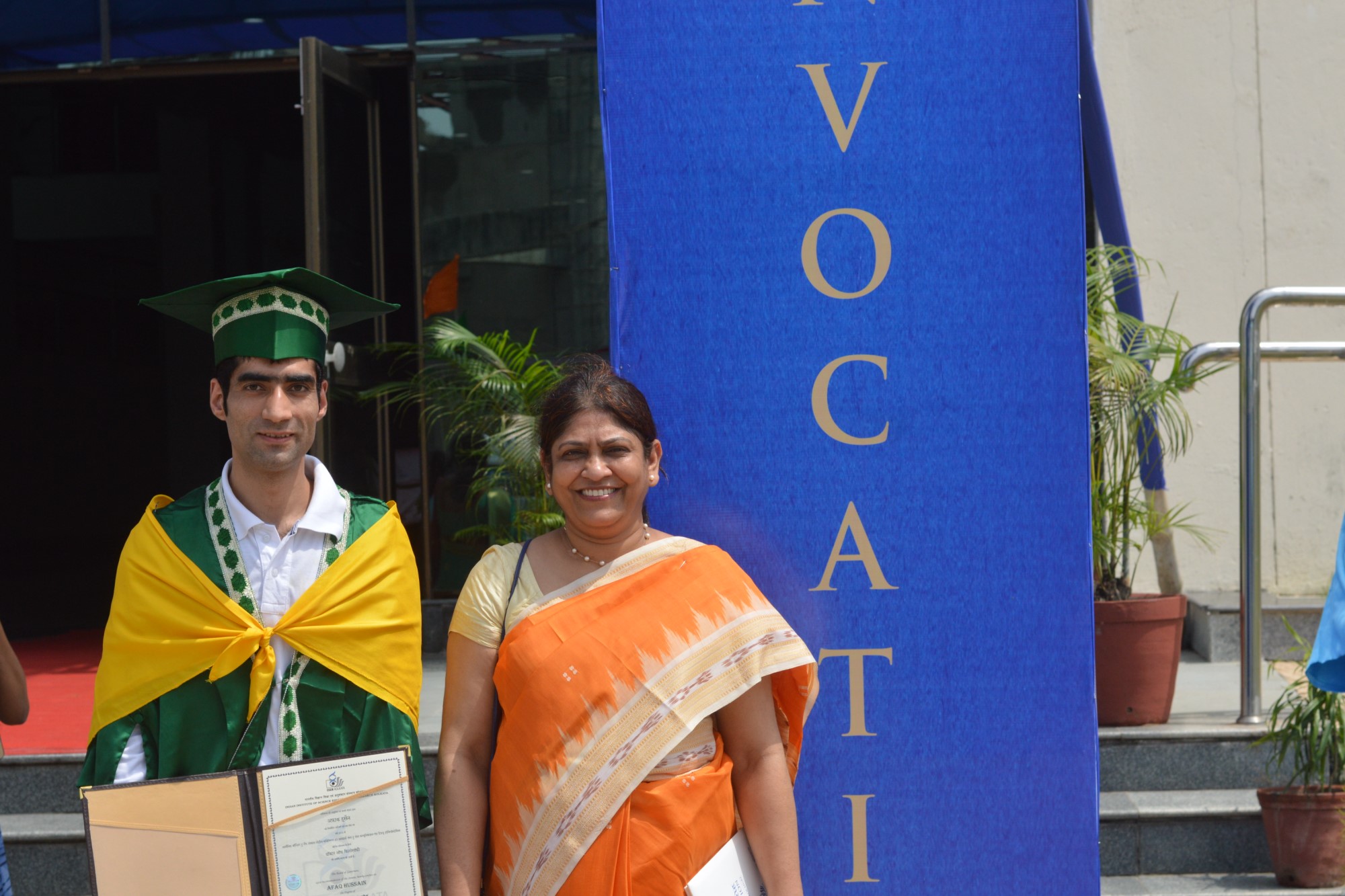
Mr. Afaq Hussain received the travel award to attend the International congress of Cell Biology 2018, Hyderabad.
Mr. Sourodip Sengupta was selected to give oral presentation at Frontiers in Molecular biology conference (FIMB-2018) at IISER Kolkata, India.
Ms. Debanjana Chakravarty and Ms. Fareeha Saadi were awarded the Stutee Nag prize for the best presentation in the poster session at the XXXV Annual Conference of Indian Academy of Neurosciences and International Conference on Translational Neurosciences and its application in protection of Mental health, Cuttack, Odisha, 2017.
Mr. Soumya Kundu was awarded the S.S. Parmar Research Foundation award for the best poster presentation the XXXV Annual Conference of Indian Academy of Neurosciences and International Conference on Translational Neurosciences and its application in protection of Mental health, Cuttack, Odisha, October 2017.
Mr. Manmeet Singh was awarded the Travel award to attend the XXXV Annual Conference of Indian Academy of Neurosciences and International Conference on Translational Neurosciences and its application in protection of Mental health, Cuttack, Odisha, October 2017.
Mr. Abhishek Bose was selected for the Oral presentation in the category of Tulsabai Somani Education Trust at the XXXV Annual Conference of Indian Academy of Neurosciences and International Conference on Translational Neurosciences and its application in protection of Mental health, Cuttack, Odisha, October 2017.
Mr. Manmeet Singh received Prof. Don Gilden Memorial Award in an International Indo US Symposium on Central Nervous System viral infection and its Therapy 2016, India.
Mr. Soumya Kundu received Best Poster Award at “3rd International Meet on Advanced Studies in Cell Signaling Network (CeSiN 2016), Indian Institute of Chemical Biology (IICB), Jadavpur, Kolkata.
Mr. Manmeet Singh received the best poster award in Frontiers in Modern Biology, organized by Dept of Biological Sciences IISER Kolkata, 2015.
Mr. Manmeet Singh received the DuPre fellowship 2015 by Multiple Sclerosis international federation society UK.
Mr. Rahul Basu received the Best poster award at the Indo-US symposium on Neurovirology, organized by IISER Kolkata and NBRC, 2014.
Mr. Jibin Sadasivin received the DuPre fellowship 2014 by Multiple Sclerosis international federation society, UK.
Ms. Kaushiki Biswas was selected for Oral presentation at Indo-US symposium on Viral Infections of the Nervous System at National Brain Research Centre (NBRC), India, 2014.
Ms. Kaushiki Biswas was awarded 3rd prize in poster presentation competition at 1st departmental day of IISER-K, 2013.
Mr. Rahul Basu received the DuPre Grant, Multiple Sclerosis International Federation (MSIF), in the year 2012.
Mrs. Dhriti Chatterjee received best poster presentation award at Immunocon 2009 (Indian immunological conference 2009).