Nonequilibrium quantum dynamics

Where coherent control meets an unruly environment.

We study open quantum systems and driven-dissipative dynamics: how quantum states evolve, lose coherence, organize collectively, and sometimes become more useful because dissipation is present—not despite it.

Our theory is built around quantum master equations. Nuclear magnetic resonance provides a versatile experimental test bed, letting us probe relaxation, driven response, collective coherence, quantum control, sensing, measurement, and nonequilibrium phases.

Animated spinning top, the Spin Lab logo

NMROpen systemsQuantum control

01 · Dynamics02 · Dissipation03 · Measurement04 · Magnetic resonance

What we ask

Research focus

Our central question is simple to state and difficult to answer: what genuinely new dynamics emerge when coherent driving, interactions, fluctuations, and dissipation act together?

02

Quantum master equations

We develop fluctuation-regularized master-equation methods that treat coherent driving and system interactions alongside environmental relaxation. These tools connect microscopic fluctuation timescales to experimentally observable rates and shifts.

03

Quantum information & control

We study state transfer, entanglement creation and storage, quantum speed limits, dynamic nuclear polarization, sensing, dynamical decoupling, and control under realistic dissipation.

04

Emergent dynamics

Our interests include discrete time crystals, prethermalization, collective decay, measurement-induced dynamics, quantum trajectories, and the quantum-to-classical transition.

05

NMR as a test bed

Nuclear magnetic resonance gives us precise control of spin Hamiltonians and relaxation. We use it to test theory, engineer driven dynamics, and identify effects that remain hidden in purely unitary descriptions.

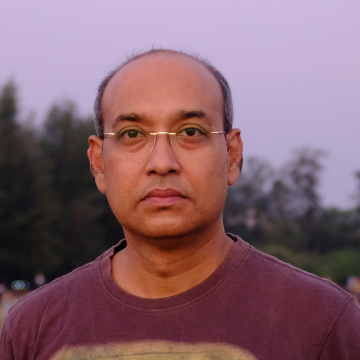
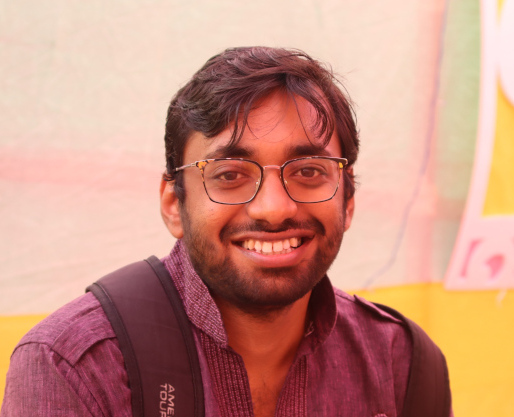
Prof. Rangeet Bhattacharyya

Principal investigator

Rangeet Bhattacharyya

Professor · Department of Physical Sciences · IISER Kolkata

Rangeet trained in experimental magnetic resonance with Anil Kumar at the Indian Institute of Science, then worked with Lucio Frydman on solid-state NMR, Clare P. Grey on spectroscopy of energy materials, and Malcolm Levitt on quantum rotors. He joined IISER Kolkata in 2010.

These days he is usually found asking quantum systems what they do when driven, dissipated, measured, or otherwise denied a quiet life. When not persuading master equations to behave, he takes an active interest in coding and LaTeX, and reads books that contain rather fewer commutators.

Current focusDriven-dissipative dynamics, master equations, quantum information, NMR
Academic pathIISc · Weizmann Institute · Stony Brook · Southampton · IISER Kolkata
Positions and honours

Positions

  • Professor, IISER Kolkata, 2021–present
  • Associate Professor, IISER Kolkata, 2016–2021
  • Assistant Professor, IISER Kolkata, 2010–2016
  • Postdoctoral fellow, University of Southampton, 2009–2010
  • Postdoctoral fellow, Stony Brook University, 2008–2009
  • Postdoctoral fellow, Weizmann Institute of Science, 2005–2007
  • PhD, Indian Institute of Science, 2005

Honours

  • Laura Marinelli Award, Rocky Mountain Conference on Magnetic Resonance, 2008
  • Feinberg Graduate School Fellowship, 2006–2007
  • Reva G. Stone Fellowship, 2005–2006
  • University Gold Medal, Jadavpur University, 1997
The people doing the calculations

Current group

Six researchers, connected by a shared interest in how quantum systems behave once the idealizations are switched off.

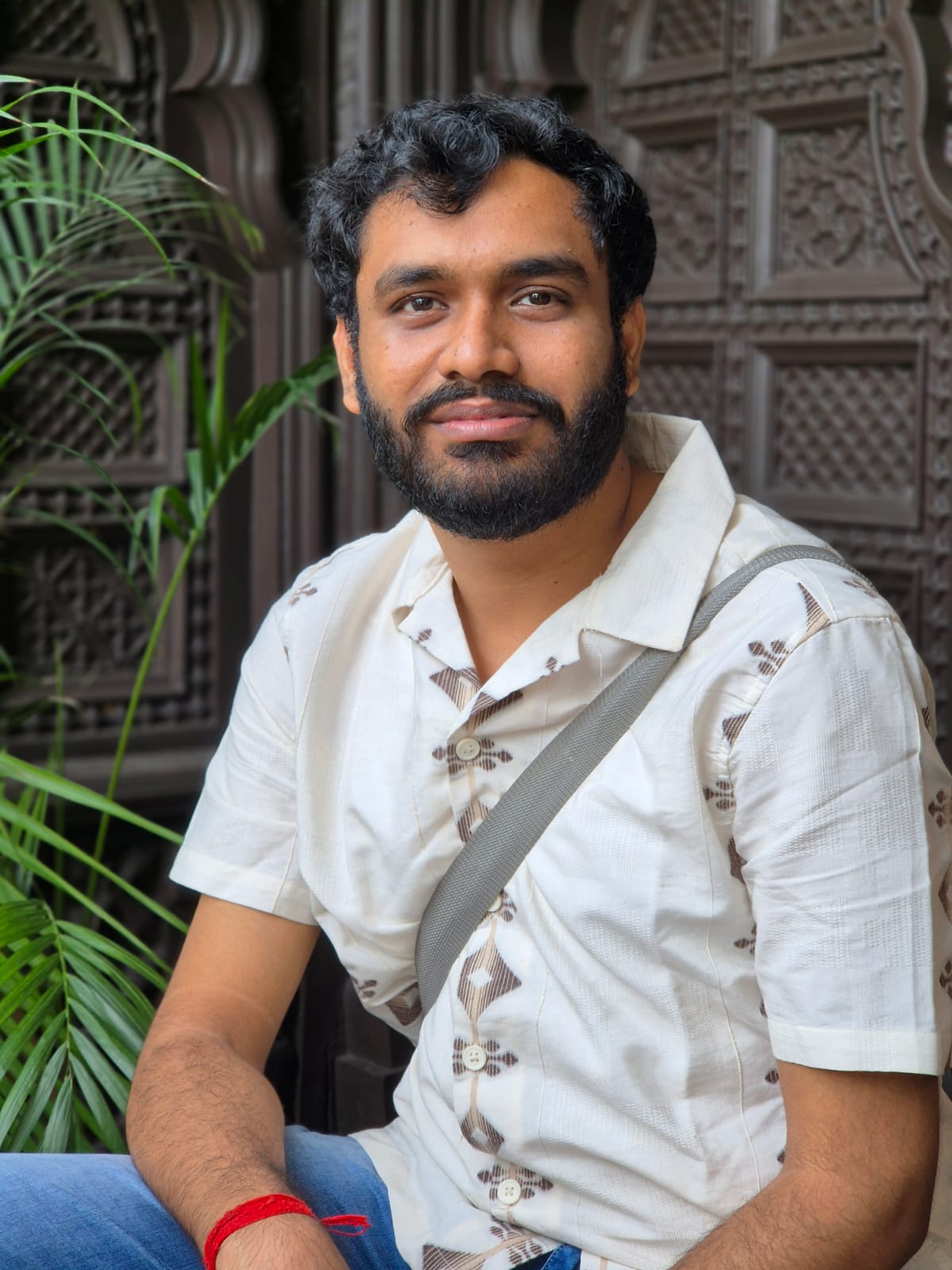
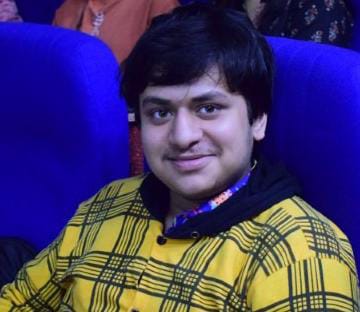
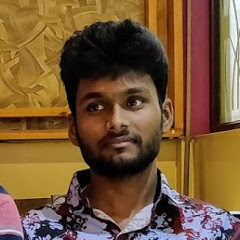
Gourab Das

PhD student

Gourab Das

Gourab studies pathways selected by dissipation. His work follows the Stern–Gerlach experiment from spin–path entanglement to separated, broadened classical beams; explores relaxation-stabilized discrete time crystals demonstrated with NMR; and investigates quantum sensing and nonuniform collective dissipation, including superradiance-like spin dynamics.

Quantum-to-classicalDTCCollective dynamicsSensing
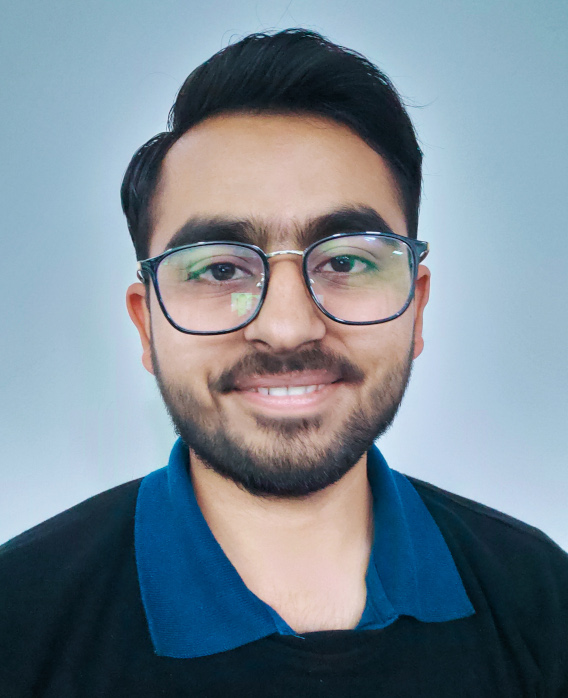
Sarfraj Fency

PhD student

Sarfraj Fency

Sarfraj works on quantum control in driven open systems. He has studied microwave-controlled polarization transfer in dynamic nuclear polarization, quantum speed limits under drive-induced dissipation, and state-selective quantum pumping produced by coupling a system to a prepared quantum source and tracing over that source.

Quantum controlDNPSpeed limitsQuantum pumping
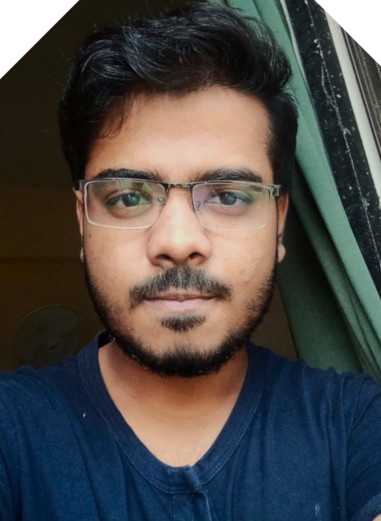
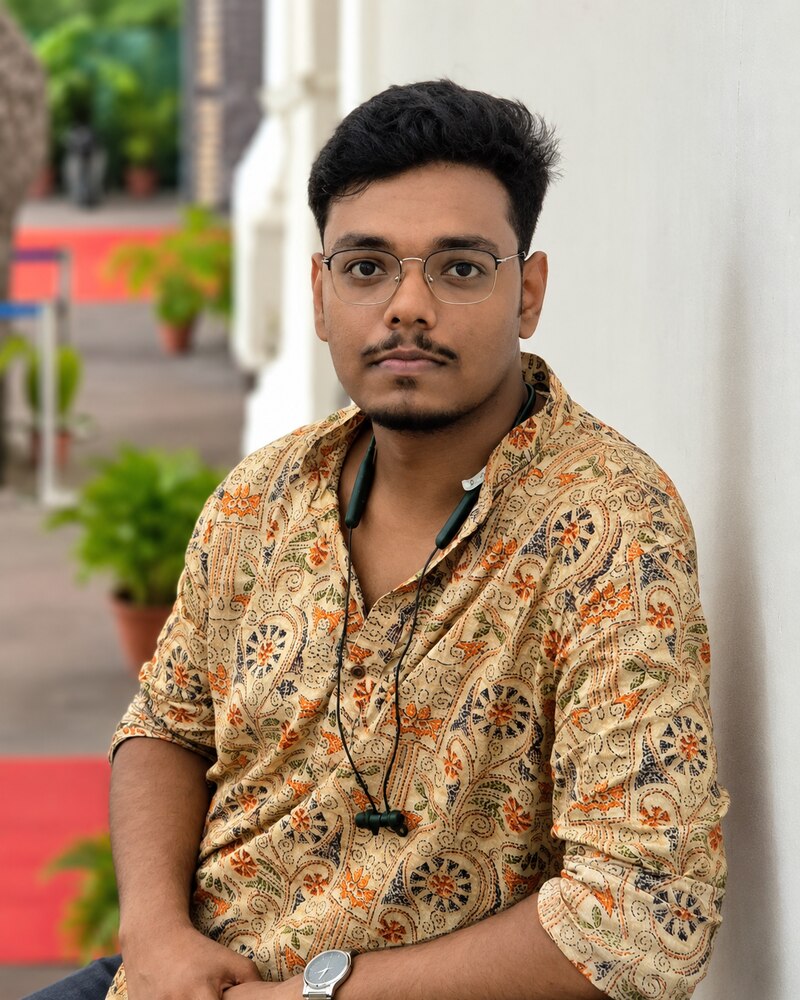
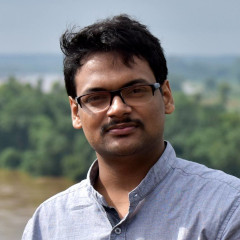
Shubhamay Panja

PhD student

Shubhamay Panja

Shubhamay studies measurement-induced discrete time-crystalline dynamics using the lab’s open-system measurement framework, related to its earlier work on the emergence of the Born rule. His broader interests include quantum measurement problems and quantum-trajectory descriptions of monitored systems.

MeasurementDTCQuantum trajectories
Debanu Bandyopadhyay

PhD student

Debanu Bandyopadhyay

Debanu works on cavity quantum electrodynamics with two atoms coupled to a cavity, with or without direct interatomic coupling. He asks when driven and dissipation-assisted dynamics can create atomic entanglement, how that entanglement can be preserved, and what the results imply for quantum information processing and storage.

Cavity QEDEntanglementQuantum memory
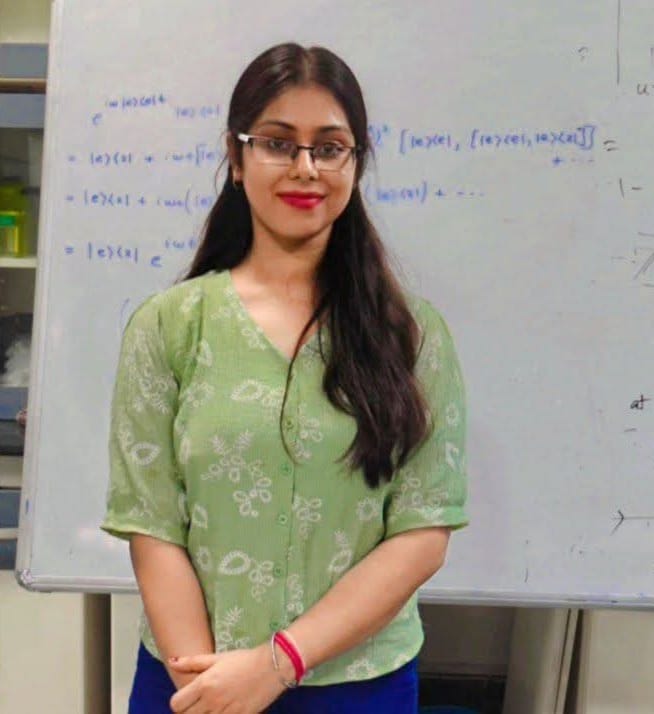
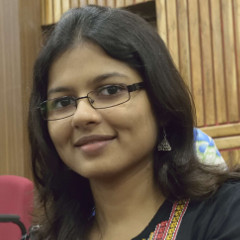
Tanaya Siddhanta

PhD student

Tanaya Siddhanta

Tanaya develops and applies quantum master-equation methods to relaxation and collective coherences. Her current problems include spin-locking dynamics and dynamical decoupling, with an emphasis on identifying compact descriptions of correlated dissipative evolution.

Master equationsSpin lockingRelaxationEntanglement
Debopriyo Das

Master’s student

Debopriyo Das

Debopriyo studies fluctuations in quantum thermodynamics. He is investigating heat flow between reservoirs and the thermodynamics of driven quantum systems, asking how drive and environmental fluctuations reshape energy transport and performance.

Quantum thermodynamicsHeat flowDriven systems

Life beyond research

Group life

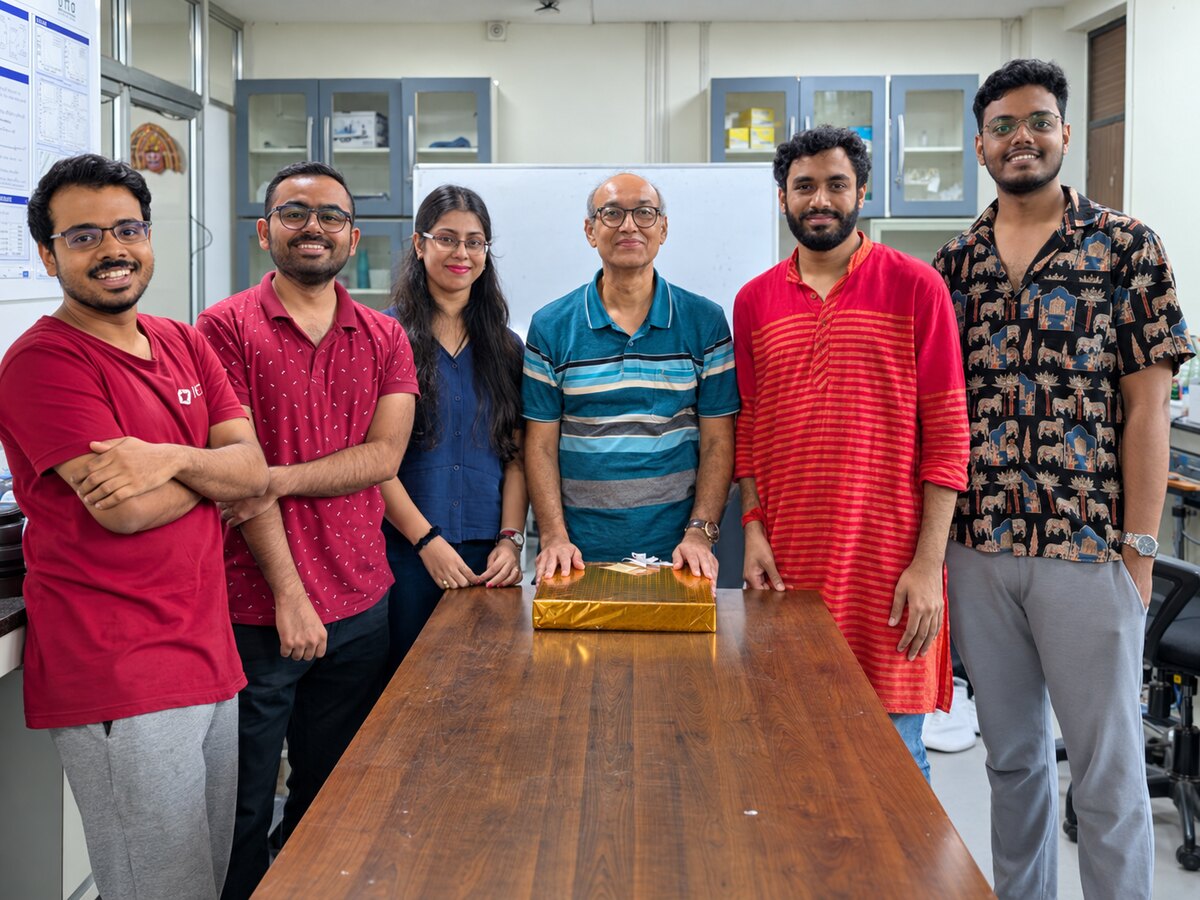
A few moments from the people and occasions that make up life in Spin Lab.

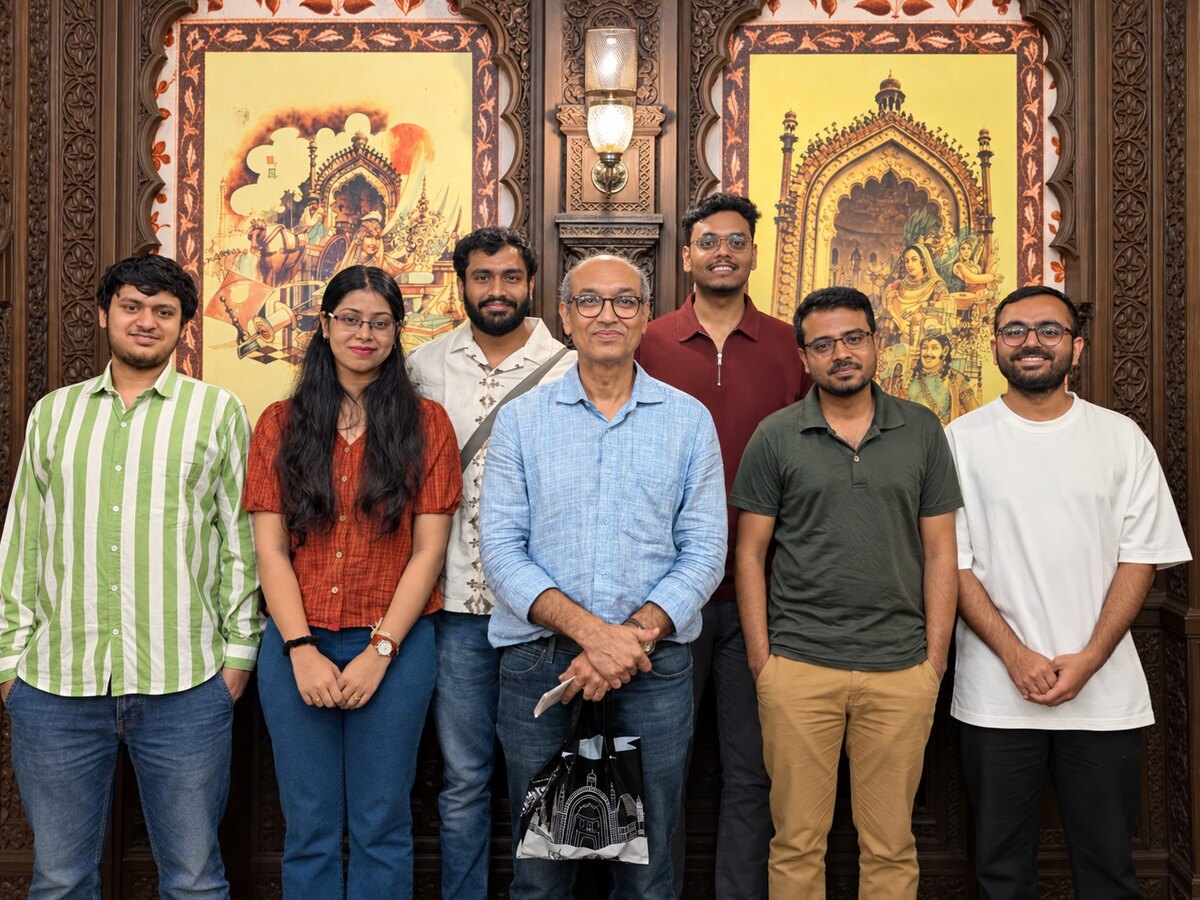
Spin Lab group gathering
Teacher's day · Spin Lab · September 2026
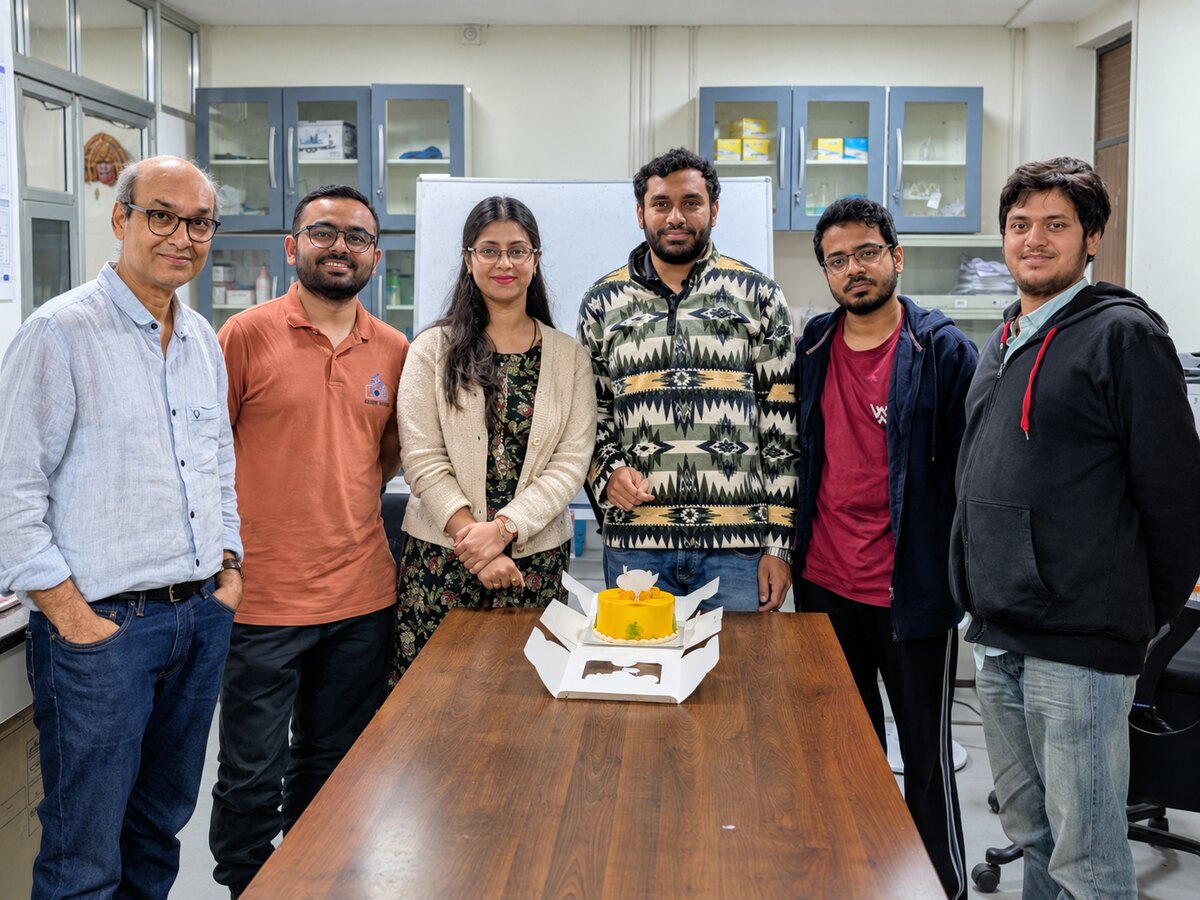
Spin Lab celebration
Lab outing · Oudh 1590 · September 2026
Spin Lab members together
Spin Lab together · Spin Lab · December 2025

Peer-reviewed journal articles · 2021–present

Selected publications

Complete list on Google Scholar ↗
  1. Optimal enhancement of the Overhauser and solid effects within a unified framework

    S. Fency and R. Bhattacharyya · Europhysics Letters 155, 55001

  2. Environment-assisted discrete time crystals in noninteracting quantum systems

    G. Das, S. Saha and R. Bhattacharyya · Physical Review A 113, 042216

  3. Emergence of superradiance in dissipative dipolar-coupled spin systems

    S. Saha, Y. Ibrahim and R. Bhattacharyya · Journal of Physics A 58, 035302

  4. Irreversibility of a Stern–Gerlach experiment

    G. Das and R. Bhattacharyya · Physical Review A 110, 062211

  5. Improved selection of dark states in the presence of drive-induced dissipation

    A. Chatterjee and R. Bhattacharyya · European Physical Journal D 78, 44

  6. Applications of dissipative dipolar systems in quantum technology

    S. Saha and R. Bhattacharyya · European Physical Journal Special Topics 233, 1425–1441

  7. Prethermal discrete time crystal in driven-dissipative dipolar systems

    S. Saha and R. Bhattacharyya · Physical Review A 109, 012208

  8. Prethermalization in an open quantum system coupled to a spatially correlated bosonic bath

    S. Saha and R. Bhattacharyya · Journal of Statistical Mechanics, 023103

  9. Optimal population transfer using adiabatic rapid passage in the presence of drive-induced dissipation

    N. Chanda, P. Patnaik, and R. Bhattacharyya · Physical Review A 107, 063708

  10. Emergence of prethermal states in a driven dissipative system through cross-correlated dissipation

    A. Chakrabarti and R. Bhattacharyya · Europhysics Letters 142, 55001

  11. Cascaded dynamics of a periodically driven dissipative dipolar system

    S. Saha and R. Bhattacharyya · Physical Review A 107, 022206

  12. Effects of dipolar coupling on an entanglement storage device

    S. Saha and R. Bhattacharyya · Journal of Physics B 55, 235501

  13. Time-periodic interaction between a spin-pair: A quantum master equation approach

    S. Saha and R. Bhattacharyya · Journal of Magnetic Resonance Open 10, 100046

  14. Emergence of the Born rule in strongly driven dissipative systems

    N. Chanda and R. Bhattacharyya · Physical Review A 104, 022436

Past members

Alumni

The group’s earlier work spans master equations, quantum measurement, nonequilibrium phases, quantum optics, NMR relaxation, entanglement, and stochastic dynamics.

Ipsita Chakraborty

Ipsita Chakraborty
Assistant Professor, S.M. College Bhagalpur, TMBU

NMR solvent relaxation, responsive polymers, and dynamical-decoupling measurements of transverse relaxation.

Arnab Chakrabarti

Arnab Chakrabarti
Assistant Professor, Rajiv Gandhi University

Fluctuation-regularized quantum master equations, drive-induced dissipation, and NMR tests.

Saptarshi Saha

Saptarshi Saha
Post doctoral fellow, Technical University Berlin

Dissipative dipolar systems, prethermalization, time crystals, entanglement storage, and solid-state NMR.

Arpan Chatterjee

Arpan Chatterjee
Post docital fellow, University of Sao Carlos, Brazil

Quantum optics, drive-induced dissipation, coherent population trapping, and resonance fluorescence.

Nilanjana Chanda

Nilanjana Chanda
Post doctoral fellow, Trinity College, Dublin, Ireland

Quantum gates under drive-induced dissipation and open-system models of quantum measurement.

Abhinaba Ghosh

Abhinaba Ghosh

Applications of fluctuation-regularized master equations to strongly coupled spin networks.

Srishti Dongare

Srishti Dongare

Connections between nuclear magnetic resonance and weak quantum measurement.

Amlan Datta

Amlan Datta
PhD student, Ames National Laboratory, Iowa State University

Open-system modelling of spin noise using modified quantum master equations.

Yeshma Ibrahim

Yeshma Ibrahim
PhD student, IIT Bombay

Intermediate-timescale thermalization and collective dissipation in spin systems.

Pratik Patnaik

Pratik Patnaik

Landau–Zener dynamics in an open two-level system under frequency-swept driving.

Ishita Jena

Ishita Jena
PhD student, University of Birmingham, UK

Multipartite entanglement in cavity systems and its use for quantum-state storage.

Arkadeep Mitra

Arkadeep Mitra
PhD student, University of Augsberg, Germany

Microscopic connections between fluctuation and dissipation in stochastic Langevin dynamics.

TM

Triyash Mukherjee

Open quantum systems

Sayanho Biswas

Sayanho Biswas

Master’s project on driven quantum Otto engines and drive-assisted enhancement of engine efficiency. Graduated June 2026.

Find us

Spin Lab

Department of Physical Sciences
Indian Institute of Science Education and Research Kolkata

Laboratory
E-036, Research Complex
Mohanpur 741246, Nadia
West Bengal, India

Email
rangeet [at] iiserkol.ac.in

Phone
+91 33 6136 0000 · Ext. 1292