| HOME | SPEAKERS | REGISTRATION | SPONSORS | CONTACTS |
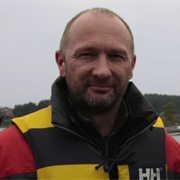 |
Richard Bellerby Norwegian Institute of Water Research (NIVA), Norway. |
|||
Richard is a chemical oceanographer studying ocean biogeochemical cycling and climate change feedbacks using observations and modelling. Richard is leader of the NIVA research group on ocean acidification and coordinator of biogeochemistry. Beginning with a PhD study entitled “Seawater pH and the Oceanic Carbon Cycle” he is no newcomer to the challenges of ocean acidification. He has been lucky enough to spend many months on oceanic expeditions and performing mesocosm experiments in the Arctic and Southern Oceans. He is on the Scientific Steering Committee on the SCOR/IGBP Integrating Climate and Ecosystem Dynamics working group representing ocean acidification research. He chairs both the AMAP Working Group and SCAR Action Group on, respectively, Arctic and Southern Ocean Acidification. |
||||
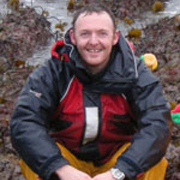 |
Stephen Widdicombe Plymouth Marine Laboratory, United Kingdom. |
|||
Dr Steve Widdicombe BSc, PhD is a marine ecologist with particular expertise in using field observations and large manipulative experiments to address issues relating to benthic ecology, biodiversity and ecosystem function. As the Head of Science for the “Marine Life Support System” science area at Plymouth Marine Laboratory, Steve leads a group of approximately 25 researchers looking at a variety of issues related to biodiversity and ecosystem function. His recent research has focussed on determining the physiological and ecological impacts of ocean acidification on benthic organisms and ecosystems. Steve has pioneered much of the early Ocean Acidification work in Plymouth and has actively driven this research area ever since. He was responsible for creating the PML seawater acidification facility which represented the first large scale facility of its kind in the world. He has participated in all previous “Life in a High CO2 World” meetings, being an invited speaker at both the 2nd and 3rd meetings held in Monaco (2008) and Monterey (2012). He was an active contributor to the EU funded EPOCA project and coordinated the EPOCA Arctic benthic experiments conducted at the Ny-Alesund Marine Laboratory in Svalbard (May 2009). He was lead author for the section “Laboratory experiments and benthic mesocosm studies” in the recently published EPOCA guide to Best Practice in Ocean Acidification Research. He currently coordinates a £2 million consortium project funded by the UK Ocean Acidification Research Programme. This consortium brings together more than 25 researchers from 12 UK research organisations to examine the impact of elevated CO2 and temperature on benthic biodiversity and biogeochemistry. Steve is also a member of the Programme Advisory Group for this funding initiative. In addition to ocean acidification research Steve is also involved in a number of UK and EU funded projects studying the ecological risks associated with the release of CO2 from geological storage sites. He regularly provides advice to UK government departments (e.g. Defra, DECC), environmental NGOs (e.g. Natural England) and has provided evidence on the ecological implications associated with geological storage of CO2 to the London Convention. Since 2006 he has published 45 peer-reviewed papers and book chapters concerned with the impacts of elevated CO2. |
||||
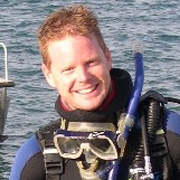 |
Bayden Russell South Seas Ecology Laboratories, The University of Adelaide, Australia. |
|||
Dr Bayden Russell is a senior lecturer at The University of Adelaide. He is interested in attempting to predict how local environmental conditions will interact with climate change in marine ecosystems, from kelp forests to coral reefs. He has identified that the combined effects of nutrient pollution and increasing CO2 concentrations will accelerate the degradation of near-shore systems and the associated species diversity and ecosystem services. Bayden’s current research has two parts. The first is to identify if management of local conditions, such as recycling waste-water to reduce nutrient pollution, can increase the resistance of ecosystems to some of the anticipated negative effect of climate change. The second is to assess how changes to the balance between primary productivity and consumption may change with different environmental conditions, and the resulting restructuring of kelp- and seagrass-dominated ecosystems. Across all of his research, Bayden uses a combination of experimental ecology, physiology and modelling approaches. |
||||
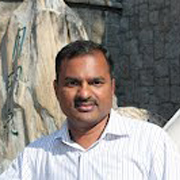 |
V. Thiyagarajan The Swire Institute of Marine Science, The University of Hong Kong, Hong Kong SAR. |
|||
Rajan is a marine biologist specializing in climate change, larval biology, proteomics and use multi-faceted approaches (from classical through to modern molecular techniques) to understand larval stress adaptation mechanisms to climate change including ocean acidification. Recently, his group has developed an international multidisciplinary collaboration involving ocean acidification, crystallography, and fishery experts to systematically study molecular mechanisms of oyster larval adaptation to climate change. His outstanding contribution to larval biology has well recognized by several organizations and journals, e.g. Hong Kong Proteomics Society (council member) and PLoS One (academic editor). For further details please visit his home page: http://www.biosch.hku.hk/staff/rajan/rajan.htm |
||||