Molecular/Organic Semiconductors (OSCs)
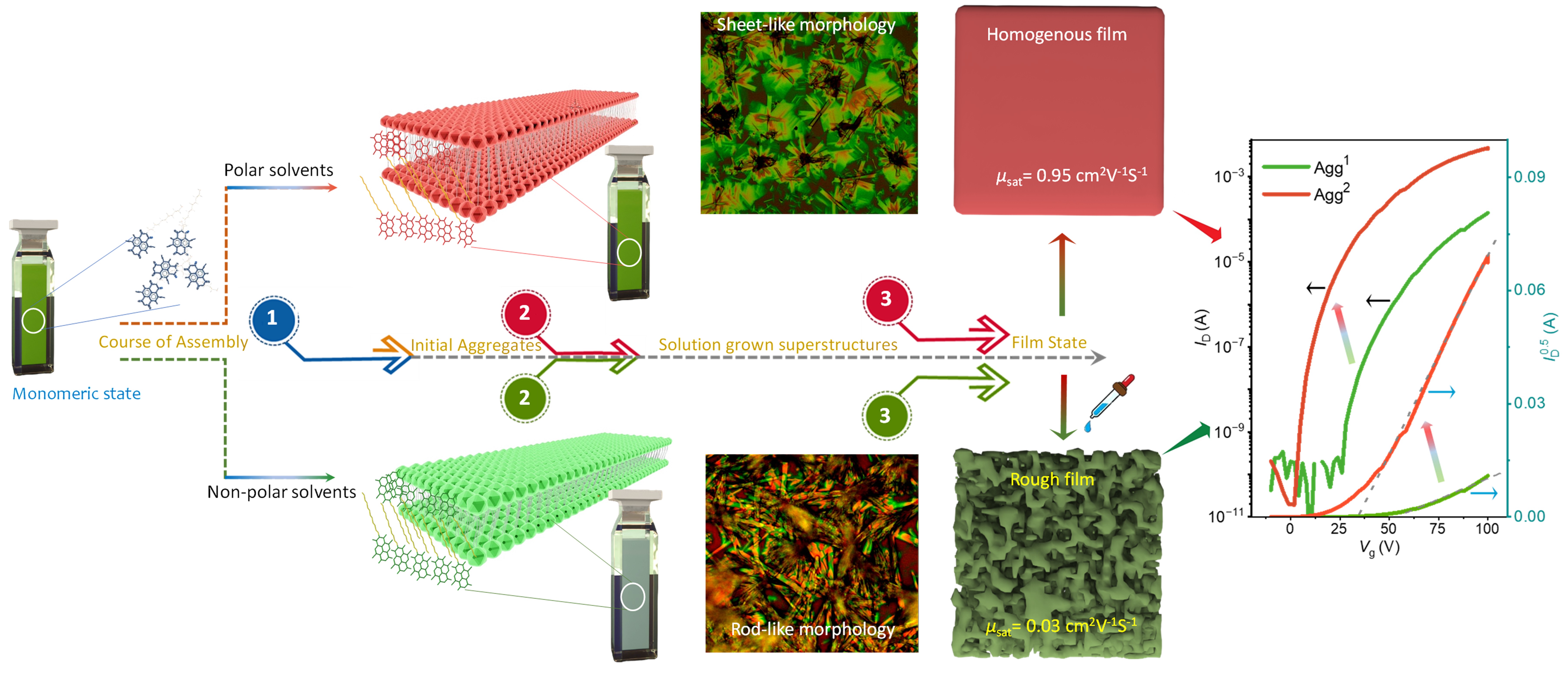
At our laboratory, we focus on the rational design and development of tailored organic semiconductors for a wide range of electronic devices and applications. A major thrust of our current research is the development of ambient-stable electron-transport materials for n-channel organic field-effect transistors (OFETs), where long-term operation under ambient conditions remains a critical challenge.
Achieving both efficient charge transport and robustness against oxygen and moisture is central to the practical deployment of n-type organic semiconductors. To address this, we employ precise molecular engineering strategies such as controlled core substitution, side-chain modulation, and electronic structure tuning to enhance electron affinity, suppress trap formation, and improve environmental stability.
Through a combination of molecular synthesis, device fabrication, and systematic structure-property-performance correlations, our work aims to advance reliable, high-performance organic electronic materials that operate stably under real-world conditions.
Key Focus Areas:
- Synthesis of new molecular semiconductors.
- Investigation of Hierarchical Self-assembly and surface driven pathways of molecular assembly.
- Various surface processing strategies for improved thin-film ordering.
Status: Active Research
Team: 3 PhDs
Organic Field Effect Transistors (OFET) and Electrochemical Transistors
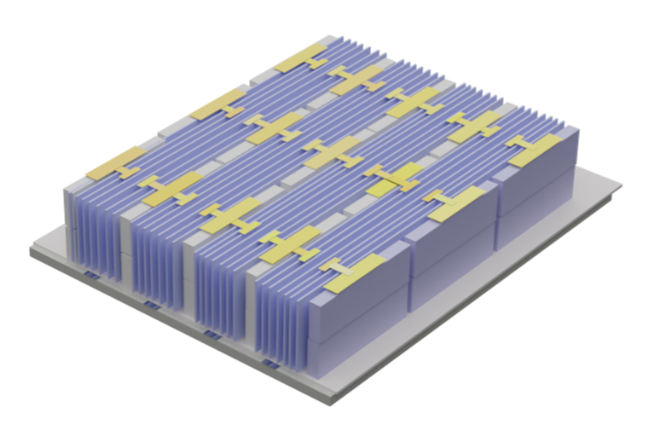
In addition to the design of novel molecular semiconductors, our research places strong emphasis on the fabrication and engineering of organic field-effect transistors (OFETs) and electrochemical transistors. For n-channel devices in particular, interfacial energetics at the semiconductor-dielectric and semiconductor-electrode interfaces play a decisive role in determining overall device performance.
We systematically investigate and engineer these interfaces to optimize key device parameters, including charge-carrier mobility, operating voltage, and contact resistance. By integrating molecular design with device architecture and interface engineering, our holistic approach aims to realize robust, efficient, and application-ready organic electronic devices suitable for real-world operation.
Key Focus Areas:
- Device engineering and contact optimization.
- Electrical measurements and analysis.
- Stability testing under environmental stress.
Status: Active Research
Team: 2 PhDs
Developing Phototransistors, Emulating Photo-synaptic Devices and Memristors
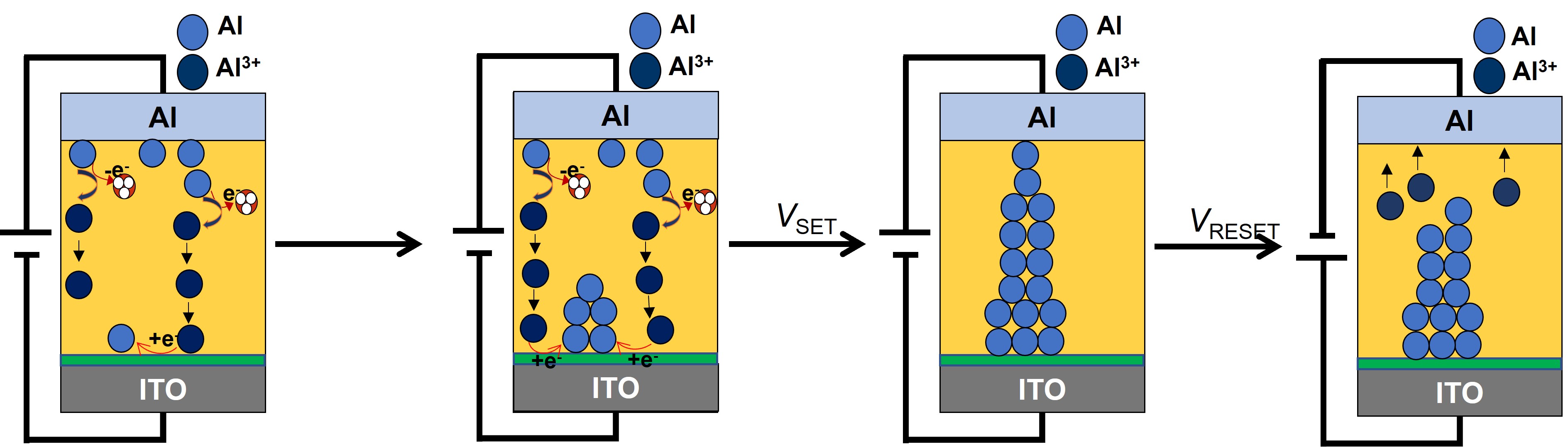
Our laboratory investigates novel physical and chemical mechanisms for the development of advanced functional devices, including phototransistors, memristors, and photo-synaptic devices. By integrating light-matter interactions with charge transport and interfacial phenomena, we aim to create device architectures that go beyond conventional transistor operation and enable neuromorphic and optoelectronic functionalities.
In the context of electrical bistability, we have recently demonstrated multiple strategies to realize both volatile and non-volatile memory elements. Our efforts focus on achieving high ON/OFF current ratios, low operating voltages, and stable switching characteristics—key requirements for scalable, low-power, and energy-efficient electronic systems. Through this approach, we seek to advance next-generation memory and synaptic devices with strong potential for real-world and neuromorphic applications.
Key Focus Areas:
- Materials and interface engineering for switching.
- Low-voltage operation and energy efficiency.
- Integration with flexible substrates.
Status: Active Research
Team: 2 PhDs
Molecular Emitters for Efficient Thermally Activated Delayed Fluorescence
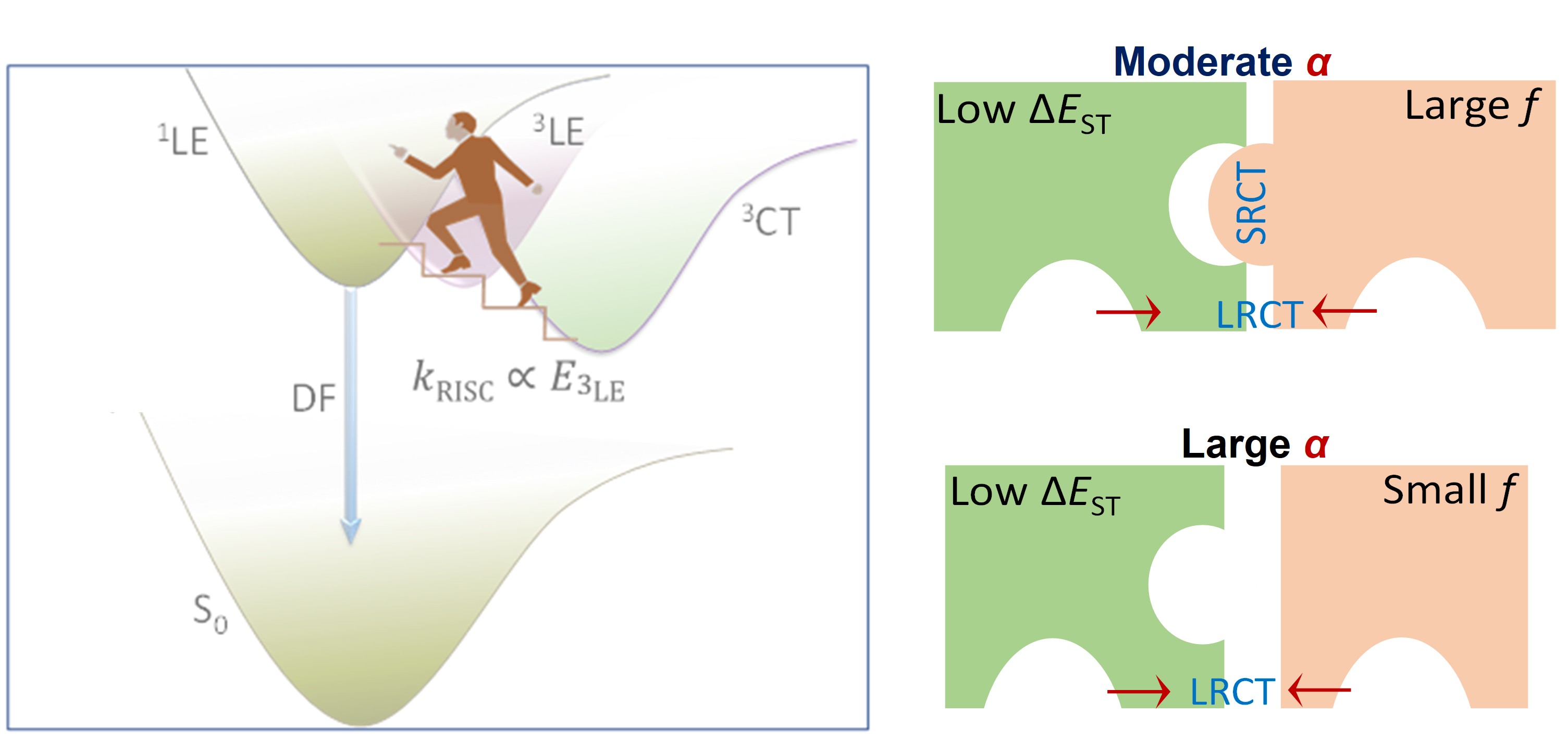
Our laboratory is actively engaged in the design and development of non-conventional thermally activated delayed fluorescence (TADF) molecules and materials. By strategically engineering molecular structures to reduce the singlet-triplet energy gap (ΔEST) and enhance the reverse intersystem crossing (RISC) process, we aim to realize emitters with high TADF efficiency and improved radiative performance.
A comprehensive investigation of the photophysical properties—including excited-state dynamics, emission behavior, and temperature-dependent characteristics—forms a core component of our research. These experimental studies are complemented by computational simulations to elucidate electronic structures and excited-state energetics, enabling a deeper understanding and rational optimization of TADF performance.
Key Focus Areas:
- Developing molecular emitters with ΔEST < 0.1 eV.
- Photophysical studies of various chromophores.
- Device prototyping for OLED applications.
Status: Active Research
Team: 2 PhDs